February 24, 2026
Reel manufacturing blends engineering discipline, material science, and forward-thinking design to create products that perform reliably in demanding environments. From early mechanical concepts to today’s highly specialized systems, the industry has steadily advanced to meet the needs of industrial, commercial, and specialty applications. Understanding how manufacturing has developed—and where it is headed—provides valuable insight into why quality, precision, and innovation remain central to long-term performance.
1. Trace the History of Reel Manufacturing
The roots of reel manufacturing extend back to simple hand-operated devices designed to make repetitive tasks easier and more controlled. Early reels were straightforward in design and limited in capability, but they established the mechanical principles that still guide production today. As industrialization expanded, manufacturers refined these devices to improve efficiency, durability, and ease of use. Over time, manufacturing evolved from basic fabrication into a sophisticated discipline supported by engineering standards and repeatable processes.
Global events and shifting economic conditions also influenced this evolution. Periods of industrial growth accelerated mechanical innovation, while times of constraint encouraged manufacturers to streamline production without sacrificing quality. Milestones in materials and mechanical systems steadily reshaped reel design, helping the industry adapt to changing applications. The progression from manually operated components to engineered assemblies reflects the adaptability and resilience that define modern manufacturing.
2. Examine Core Components and Materials
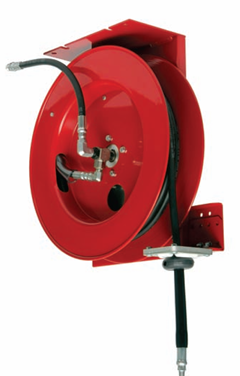
Every reel relies on a carefully integrated system of components working together to ensure smooth operation. The spool serves as the central structure, guiding and containing line or hose, while gearing systems, tension controls, and support frames maintain stability and controlled movement. Even seemingly minor elements, such as guides and bearings, play a vital role in reducing wear and maintaining alignment. In reel manufacturing, the relationship between these parts is engineered with tight tolerances to deliver consistent performance under stress.
Material selection directly influences strength, longevity, and safety. Structural metals, reinforced composites, and engineered polymers are chosen based on load requirements and environmental exposure. In high-demand settings, durability becomes especially critical. According to IQSdirectory.com, high-pressure hose reels are specifically designed to handle water blasting, pressure washing, hydraulic systems, and industrial cleaning tasks that operate beyond 3,000 PSI, requiring materials capable of withstanding extreme force. Such requirements demonstrate how manufacturing depends on advanced material strategies to meet rigorous performance standards.
3. Apply Precision Engineering and Quality Control
Precision is foundational in reel manufacturing. Each component must be produced within carefully defined tolerances to prevent imbalance, premature wear, or operational failure. Computer-guided machining and calibrated tooling ensure that spools rotate smoothly and structural frames maintain alignment under load. Engineers continuously refine dimensions and stress points to support safe, dependable operation across varied applications.
Quality control extends beyond visual inspection. Manufacturers conduct performance testing, stress evaluations, and endurance assessments to verify durability before products reach the field. Inspection systems identify minute irregularities that could compromise reliability, reinforcing consistent standards across production runs. Through rigorous oversight and ongoing refinement, manufacturing maintains the dependability required for both industrial and commercial environments.
4. Integrate Advanced Manufacturing Technologies
Technological innovation has reshaped reel manufacturing in profound ways. Computer-aided design allows engineers to model assemblies digitally, identify potential stress points, and refine geometry before physical production begins. Automation supports consistent fabrication of repeatable components, reducing variability while increasing efficiency. Robotics further streamline assembly, particularly in processes that demand accuracy and repeatability.
Prototyping technologies have also shortened development cycles. Additive manufacturing enables rapid testing of new configurations, while smart monitoring systems collect real-time data from production equipment to enhance process control. These technologies reduce waste, improve accuracy, and support scalability. As digital tools continue to evolve, manufacturing benefits from improved workflow coordination and more efficient transitions from concept to finished product.
5. Address Environmental Responsibilities
Modern reel manufacturing must balance productivity with environmental responsibility. The extraction and processing of metals and composites require significant resources, prompting manufacturers to evaluate energy use and material efficiency at every stage of production. From raw material procurement to final assembly, companies are analyzing how each step impacts consumption patterns and waste generation. Efforts to optimize production flow, reduce scrap, and reuse materials help minimize the environmental footprint of fabrication processes while maintaining strict quality standards. Lean manufacturing principles, improved inventory control, and advanced cutting technologies further support waste reduction by ensuring that materials are used as efficiently as possible.
Recycling initiatives and sustainable sourcing strategies are increasingly integrated into operational planning. Manufacturers are forming partnerships with suppliers who prioritize environmentally responsible mining, refining, and transportation practices, strengthening accountability across the supply chain. Companies also explore renewable energy options, high-efficiency equipment, and cleaner production methods to reduce emissions associated with manufacturing and distribution. Water conservation systems and closed-loop cooling processes are being adopted to limit resource depletion in high-output facilities. By prioritizing responsible material management and energy efficiency, manufacturing aligns operational performance with broader sustainability goals while maintaining product integrity and long-term durability.
6. Analyze Market Forces and Competition
Market demand strongly influences the direction of reel manufacturing. Growth in construction, utilities, agriculture, and industrial services continues to drive the need for durable, application-specific reels capable of performing in challenging environments. Customers increasingly expect equipment that withstands heavy use, harsh weather exposure, and high mechanical stress without compromising safety. As expectations evolve, manufacturers refine designs to emphasize longevity, corrosion resistance, and ergonomic operation. Customization has also become more important, with clients seeking reels tailored to unique mounting configurations, load requirements, and operational constraints. Competitive pressure encourages continuous improvement and sustained investment in research and development to differentiate products in a crowded marketplace.
Supply chain stability and trade considerations also shape strategic planning. Access to raw materials, transportation logistics, and regulatory frameworks can significantly affect production timelines and cost structures. Disruptions in shipping networks or fluctuations in material availability can ripple across manufacturing schedules, prompting companies to strengthen contingency planning. To remain competitive, manufacturers diversify sourcing strategies, cultivate long-term supplier relationships, and adopt digital supply chain tools that enhance visibility and coordination. Real-time tracking systems and integrated planning platforms help anticipate delays and improve forecasting accuracy.
7. Anticipate Future Innovations in Reel Manufacturing
The future of reel manufacturing will likely be defined by greater automation, enhanced analytics, and expanded customization capabilities. Artificial intelligence and machine learning tools are being integrated into production planning and maintenance forecasting, helping reduce downtime and optimize output. These technologies support more agile operations and data-driven decision-making throughout the manufacturing lifecycle.
At the same time, customer preferences continue to shift toward environmentally responsible and highly durable products. Manufacturers are exploring innovative materials and modular designs that improve serviceability and extend product life. As digital integration deepens and sustainability expectations rise, manufacturing will remain focused on combining engineering excellence with adaptable, forward-looking solutions.
Reel manufacturing stands at the intersection of engineering precision, material science, and industrial innovation. From its early mechanical origins to its integration of automation and smart technologies, the industry continues to evolve in response to performance demands and environmental considerations. A clear understanding of its history, components, technological advancements, and market dynamics highlights the complexity behind every finished product.
As expectations for durability, safety, and sustainability continue to grow, the future of reel manufacturing will depend on disciplined processes and innovative thinking. If you are seeking dependable expertise and forward-focused solutions, contact Duro Manufacturing, LLC today.